
Match 3D Saga - Puzzle Games
Games VesselPuzzle
4.8523.00 Reviews
- Version
- 7.8.6
- Installs
- 1.00M
- Age Rating
- Everyone
Screenshots
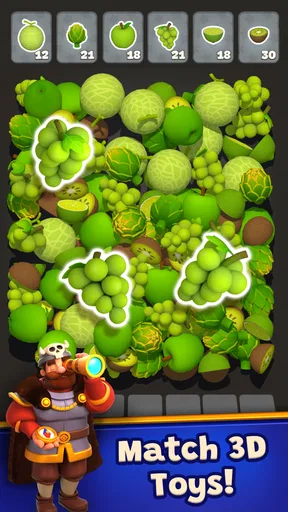
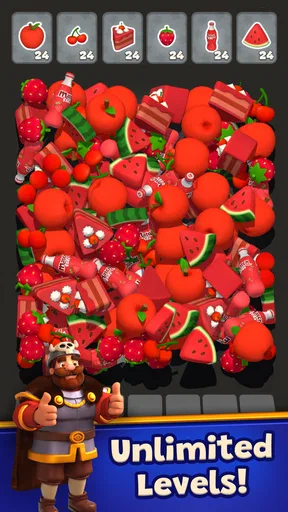
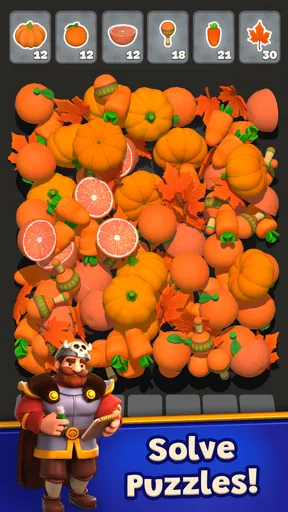
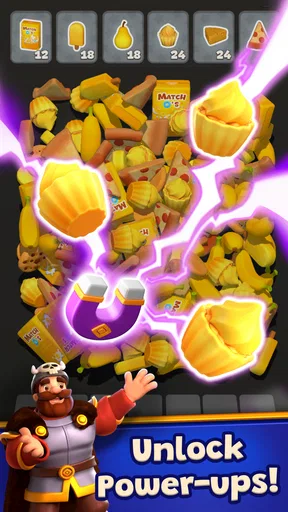
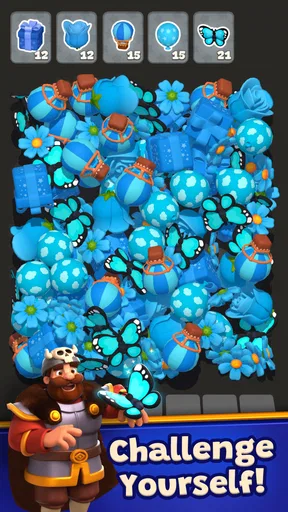
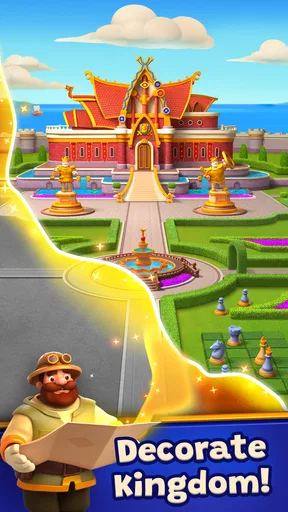
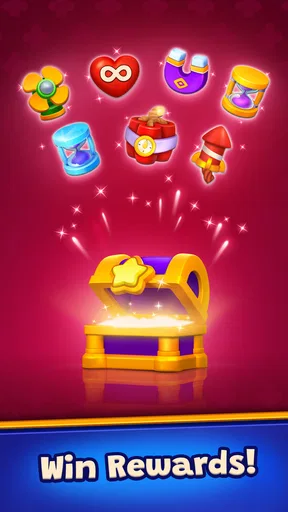
Our Review of Match 3D Saga - Puzzle Games
 Analysis by Appyee
Match 3D Saga is the kind of puzzle game I open when I want something simple to understand but surprisingly absorbing once I get started. Its central idea is familiar: find three matching three-dimensional objects and clear them from the board. What makes the experience work is the extra visual effort involved in recognizing items from different angles, separating similar shapes, and deciding which matches to make before the available space becomes awkward.
After spending time with it, my overall view is positive but fairly specific. This is not a deep strategy game or a relaxing picture-matching toy with no pressure at all. It sits between those two styles. The early play feels accessible, while later decisions ask you to manage visibility, order, and limited room for mistakes. If you enjoy short puzzle sessions and like the satisfaction of tidying a crowded screen, this is an easy game to recommend. If you want a story, competitive multiplayer, or a completely predictable challenge, you may find it too narrow.
How the three-dimensional matching works in practice
The basic interaction is immediately readable. I look over a pile of objects, tap three that belong together, and watch them disappear. The important difference from a flat matching game is that the pieces are presented as objects rather than simple colored tiles. A shape may be partly hidden, turned away, or visually close to another item, so the real challenge is not merely remembering a pattern. It is scanning the whole arrangement and judging what is actually available.
That visual layer gives the game its identity. In a conventional match-three title, I usually think in terms of rows, columns, swaps, and chain reactions. Here, I think more like someone sorting a messy drawer. I search for a third item, check whether selecting it will expose something useful, and avoid filling the lower selection area with unrelated pieces. The result is slower and more deliberate than a fast tile-swapping game, even though each individual tap is uncomplicated.
The game belongs firmly in the puzzle category, but the triple-match format makes it approachable for people who do not normally play complex brain games. I never need a long explanation before beginning. The learning curve comes from improving my observation and planning rather than memorizing complicated rules. That makes it suitable for a quick break, although the increasingly crowded layouts can demand more attention than the cheerful presentation first suggests.
Why the three-dimensional presentation matters
The objects are not just decoration placed on top of a standard puzzle system. Their apparent depth changes how I read the board. A piece that looks obvious at first may be blocked by other pieces, while a less noticeable item can become valuable once its matching pair is found. I found myself rotating my attention across the pile even when the game did not require a literal camera control, because perspective and overlap affect which choices are sensible.
This creates one of the game’s strongest moments: finding a match that was technically visible but easy to overlook. It rewards patience more than frantic tapping. I also liked that clearing one group can change the entire visual situation. The best move is not always the first complete trio I spot; sometimes it is better to remove a less exciting group because doing so reveals a more useful object underneath.
That is a meaningful distinction from many casual puzzle alternatives. A standard match-three board often tells me exactly what is adjacent and what can be swapped. This game asks me to interpret a cluttered arrangement before acting. Players who enjoy hidden-object observation, sorting games, or light spatial reasoning will probably appreciate that difference.
A practical way to approach difficult boards
My most useful habit was to avoid tapping every match as soon as I saw it. I first made a quick visual sweep and mentally grouped objects by type. That small pause helped me notice whether a trio was blocking another piece and reduced the chance of creating an awkward selection queue. When the board became busy, I prioritized matches that opened a central area or exposed several new objects rather than simply removing the easiest group.
Another effective approach is to treat the available holding space as a resource, not a place to store random pieces. If I selected one or two objects without a clear plan for completing their trio, I could make the next decisions harder. I therefore tried to commit only when I could identify the third matching item or when the move clearly improved visibility. This is one of the game’s less obvious skills, and it turns a casual tapping routine into a modest planning exercise.
I also found it helpful to scan from the outside of the pile toward the center. Edge pieces are easier to understand because fewer objects overlap them, while central pieces can become useful after the perimeter is cleared. This is not a guaranteed solution for every layout, but it provides a reliable starting workflow. It also makes the game feel less random because I am building a repeatable method instead of waiting for an obvious match to appear.
Where the experience feels strongest
The strongest part of the game is its low barrier to entry combined with enough friction to keep each board from feeling automatic. I can begin with no preparation, understand the objective immediately, and still find myself reconsidering a move several turns later. That balance is difficult to achieve in a casual puzzle. Too much simplicity becomes repetitive; too much complexity prevents the game from working as a short-session activity.
It is particularly effective during small gaps in the day. I can imagine playing while waiting for an appointment, taking a short break from work, or winding down before bed. The individual actions are easy to pause mentally, but the visual search gives me something more engaging than a passive time filler. I would not describe every session as calming, because a crowded board can create pressure, but the game generally feels more constructive than frustrating when I make deliberate choices.
The presentation also helps the format. Three-dimensional objects are easier to recognize as categories than as abstract symbols, so the game does not depend entirely on color matching. That can make the board feel more tactile and varied. At the same time, similar-looking objects can occasionally slow me down, especially when I am scanning quickly. I see that as both a feature and a limitation: the visual ambiguity creates challenge, but it can also make a mistake feel like a recognition problem rather than a strategic one.
The main weakness: visual clutter and the cost of mistakes
The same crowded-board design that supplies the challenge can become the game’s biggest source of friction. When several objects overlap or share similar silhouettes, I sometimes spend more time confirming what I am looking at than making a genuinely interesting decision. Players who prefer clean, highly legible boards may find this tiring, particularly in longer sessions.
The game also asks me to remember the consequences of each selection. A careless tap is not always harmless, because it can occupy valuable space with pieces that do not yet form a complete trio. That pressure is appropriate for a puzzle, but it means the experience is less suitable when I want completely mindless relaxation. If I am distracted by conversation or trying to play while doing something else, my performance drops quickly.
There is another trade-off in the free model. The game is free to download and play, while optional in-app purchases range from $0.99 to $99.99 per item. That broad range is worth keeping in mind before spending. I would approach purchases cautiously and decide in advance whether I am comfortable paying for convenience or additional assistance. For me, the core appeal is strong enough to try without paying, but anyone who dislikes purchase prompts or progression systems connected to optional spending should pay attention to how the game fits their habits.
I would also avoid judging the game solely by its average rating. Its 4.8 average from around 4K ratings and more than 500 reviews suggests that many players enjoy the formula, and over 1M installs show that it has reached a substantial audience. Those figures are encouraging, but they do not remove the personal question of whether sorting three-dimensional objects is the kind of repetition you enjoy. A popular casual game can still be the wrong match for someone who wants narrative variety or fast action.
Who should install it, and who should look elsewhere
I think it is a particularly good fit for players who like organizing, spotting patterns, and improving through small decisions. If you enjoy the feeling of clearing a messy surface, the triple-match structure has a satisfying rhythm. It is also approachable for casual players who do not want a complicated tutorial, and the Everyone content rating makes it suitable for a broad audience from an age-rating perspective.
It can work well for families sharing a device, although I would not present it as a cooperative game. The decision-making is primarily individual, so its social value comes from comparing approaches or taking turns rather than from playing together on the same board. A parent might enjoy showing a younger player how to scan the pile, while an experienced puzzle fan may prefer to optimize the order of matches independently.
Players who should skip it are those looking for a rich campaign, character development, competitive rankings, or a constant stream of radically different mechanics. The game’s pleasure comes from refining one central activity, not from changing genres every few minutes. Likewise, if you prefer classic match-three games built around quick swaps and explosive combinations, this may feel too slow and visually demanding. A traditional grid-based alternative would be better when you want immediate pattern recognition and rapid reactions.
It is also not my first choice for someone seeking a pure mindfulness app. Although the rules are simple, the need to watch the holding area and anticipate blocked pieces can become mentally active. For relaxation, I would choose it only if the act of sorting itself feels calming. For stress-free background play, a gentler game with fewer consequences may be a better option.
Everyday use and device expectations
In an ordinary session, I would open it with a clear limit in mind: one board during a short break, or a few minutes before switching tasks. That approach suits the game better than treating it like a long-form adventure. The visual search is engaging enough to pull me in, so setting a stopping point helps prevent a quick break from turning into an unplanned extended session.
The current version is 7.8.6, and the game supports devices running Android 6.0 or later. That makes it accessible to people using older compatible Android hardware, although actual comfort will still depend on screen size and how easily objects can be distinguished. On a smaller display, crowded layouts may require more careful inspection. I would especially recommend checking that taps feel precise before deciding whether it is comfortable for extended play.
Because the game relies on recognizing objects in a busy three-dimensional arrangement, screen clarity matters more here than it does in a simple two-color puzzle. A larger phone or tablet can make scanning easier, while a compact screen may make similar items look more alike. This is a practical consideration that is easy to overlook when reading a short description, but it has a direct effect on enjoyment.
How it compares with familiar puzzle alternatives
Compared with classic match-three games, this title replaces board geometry and chain reactions with object recognition and selection order. I get fewer moments of explosive cascading, but more time to inspect and plan. That makes it a better choice when I want a measured sorting challenge and a weaker choice when I want speed, combos, or tactical swaps.
Compared with hidden-object games, it has a clearer repeatable goal. I am not searching for a long list of unrelated items in a scene; I am building groups of three and managing the consequences of each find. Compared with sorting games, it adds more uncertainty because the objects can be obscured or visually similar. The result is a middle ground: more active than simple categorization, but less demanding than a complex logic puzzle.
That positioning is why I think the game succeeds. It does not need to reinvent the entire puzzle category. Instead, it takes the familiar satisfaction of making sets and gives it a spatial, tactile layer. The trade-off is that the central mechanic can eventually feel repetitive if I need constant novelty. Its longevity depends on how much I enjoy getting better at reading the same type of challenge.
My recommendation after playing
The best reason to try Match 3D Saga is its balance of immediate rules and gradual decision-making. I can understand it in moments, yet the board still rewards a pause, a scan, and a plan. The most satisfying sessions are not the ones where I tap fastest; they are the ones where I preserve space, expose useful pieces, and clear a difficult arrangement without wasting a move.
Games Vessel has built a focused puzzle experience rather than an all-purpose mobile package. That focus is its strength and its boundary. I would recommend it to anyone who likes casual matching with a visual twist, especially players who enjoy sorting, object recognition, and short repeatable challenges. I would be more cautious about recommending it to people who dislike crowded screens, optional purchase systems, or puzzles that punish distracted play.
As a free game with an Everyone age rating, a 4.8 average, and a large existing audience, it is easy to justify giving it a try. I would begin with the free experience, use the holding area carefully, and decide whether the visual search feels satisfying before considering any optional purchase. For my own use, it works best as a focused break rather than an all-night game: approachable, pleasantly absorbing, and strongest when I treat each trio as a small planning problem instead of just another tap.
Verdict
Strengths of Match 3D Saga - Puzzle Games
- Simple match-3D gameplay that is easy to learn
- Relaxing pace suits short, casual play sessions
- Wide variety of objects keeps levels visually fresh
- Helpful boosters can make difficult stages more manageable
- Works well for players who enjoy tidy, organized puzzles
Limitations of Match 3D Saga - Puzzle Games
- Later levels may feel repetitive despite changing objects
- Some boosters and extra moves may encourage in-app purchases
- Timed challenges can be stressful for players seeking a calm game
- Progress may depend heavily on completing levels in sequence
- Ads can interrupt the experience, especially after failed attempts
Similar Picks in This Category
View All
Block Blast!
HungryStudio4.8

Braindom: Brain Games Test
Lahana Game Studio4.6

AMAZE!
CrazyLabs LTD4.6

Sudoku - Classic Sudoku Puzzle
Oakever Games4.7

Art Puzzle - Puzzle Games
Easybrain4.8

Amaze GO!
Oakever Games4.9
Frequently Asked Questions
What is Match 3D Saga - Puzzle Games?
Match 3D Saga - Puzzle Games is a casual sorting and matching game built around finding two identical three-dimensional objects and pairing them before time runs out. Instead of swapping jewels on a grid, you search through a pile of colorful items, tap matching pairs, and gradually clear the level. Its simple controls make it approachable, while increasingly crowded layouts and limited time add a moderate challenge.
How do you play Match 3D Saga - Puzzle Games?
Gameplay is easy to understand, even for first-time players. Objects are scattered across the screen, and you tap two matching items to remove them from the pile. You need to inspect shapes, colors, and small details carefully because some objects can be partially hidden. As levels progress, the arrangements become busier and the timer creates pressure, so quick observation and a sensible search order are important.
Is Match 3D Saga - Puzzle Games free to download and play?
The game is generally available as a free download, allowing players to begin without purchasing it upfront. However, free puzzle games commonly include advertising, optional in-app purchases, or both. Ads may appear between levels or after using certain assistance features, while purchases can sometimes provide coins, boosters, or other conveniences. Check the current store listing for exact pricing and purchase details before downloading.
Does Match 3D Saga - Puzzle Games require an internet connection?
Many parts of a casual matching game may work without a constant internet connection, which is useful when playing during travel or in areas with weak coverage. Nevertheless, an online connection may still be needed for advertisements, cloud-related features, updates, events, or restoring purchases. Offline availability can also vary between versions and devices, so it is best to test the game after installation rather than assuming every feature works offline.
Is Match 3D Saga - Puzzle Games suitable for children and casual players?
The basic matching mechanics are suitable for casual players and can be enjoyed by a wide range of ages because they rely on visual recognition rather than complicated controls. Younger children may need help with timed stages, advertisements, or optional purchases. Parents should review the age rating, advertising policy, and in-app purchase settings on the relevant Android or iOS store before allowing unsupervised play.
Play our best games!


